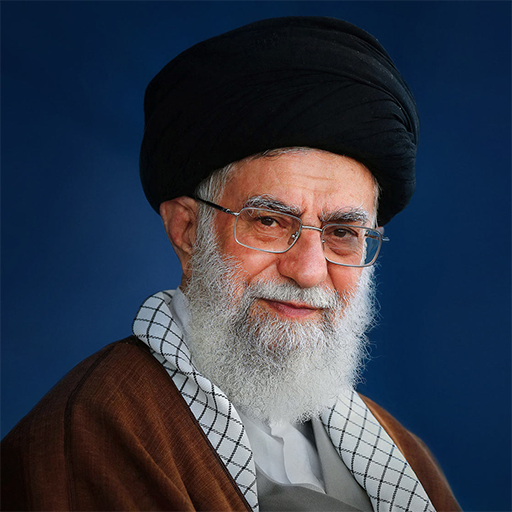
.Bara'at Surah Tafsir By Khamenei Shahid ,Fourth discourse / verses 13 to 16
الا تقتلون قوما نكثوا ايمنهم و هموا باخراج الرسول و هم بدؤ كم اول مرة اتخشونهم فالله احق ان تخشوه ان كنتم مومنين (13)
قاتلوهم يعذبهم الله بايديكم و يخزهم و ينصركم عليهم و يشف صدور قوم مومنين (14)
و يذهب غيظ قلوبهم و يتوب الله على من يشاء و الله عليم حكيم (15)
ام حسبتم ان تتركوا ولما يعلم الله الذين جاهدوا منكم و لم يتخذوا من دون الله و لا المؤمنين و ليجة والله خبير بما تعملون (16)
Why do you not fight a people who broke their oaths and plotted to expel the Messenger of Allah, and it was they who first waged war against you? Do you fear them, while Allah is more deserving of your fear, if you are believers? (13) Fight them; Allah will punish them by your hands and disgrace them, and grant you victory over them, and cool the hearts of the believers. (3) And remove the anger from their hearts. Allah accepts the repentance of whom He wills. And Allah is Knowing, Wise. (5) Do you think that you will be left to yourselves, and that Allah will not know those of you who strive hard and do not take any secret from other than Allah and His Messenger and the believers? And Allah is Aware of what you do. (16)
Proportion of verses
As mentioned at the beginning of the discussion, the initial verses of this Surah are addressed to the infidels, polytheists, and the rest of the audience in the same year that the assembly was held in Mecca. Some commentators and traditionists have considered the divine declaration to include only the first verses of the Surah, while some have considered the declaration to be up to five verses, while others have considered the declaration to be between thirty and forty verses. According to these statements, some of the verses of this Surah were revealed at another time, or had been revealed before and were recited at that time, or some of the verses were not recited at that time. Therefore, the determination of these verses is not known
It seems that the verses in question are not among those verses that were recited by the Commander of the Faithful (peace be upon him) in the presence of all the polytheists, because they are addressed to the believers and outside of the discussion of the polytheists, the first three verses were addressed to the Muslims to incite them against the infidels. In the first three verses, there are many precise points that can be observed in the few verses containing a ruling. Some of these points refer to the general view and understanding of Islam. In these verses, the reader can clearly understand how the Muslims were encouraged to fight the Quraysh infidels in a single, beautiful way, and how much material is included in them
Victory at your hands will torment you and in their torment you will be the hand of Allah. In these verses, Allah says: Fight them. Allah will be their God and He will disgrace them and will give you over them. He will heal the hearts of groups of believers with this victory and will cool their hearts. Allah will remove their anger, wrath and hatred at your hands. He accepts the repentance of whomever He wills. Allah is Knowing and knows the causes and factors of the world better than you. In addition, He is Wise, that is, " متقن الصنعMutghan al-Sona"; or He knows and His work is conscious; or the work that Allah does, His art is not perishable and is deep-rooted; just as all the art of Allah has been rooted throughout history. The art of Pharaoh was destroyed because it had no roots; but the art of Allah and Moses (peace be upon him) still remains
The interrogative tone is the peak of the verse's rhetoric
In the first verse: “Do not fight a people who have broken their oaths and are anxious to expel the Messenger, while they are the first to fear them. Indeed, Allah has more right that you fear Him if you are believers.” This is an eloquent and clear command addressed to the believers for jihad and fighting against the polytheists. The command can be issued in several forms: sometimes it is a direct command; for example, it says to pray, and sometimes it asks in the form of a question: Do you not pray? The second type, according to the testimony of scholars, is subtler
He has commanded jihad. Is it more attractive to fight against people who have broken their covenants? The command of the verse is of the second type, which is in the form of an interrogative sentence
The foundation of Islam for the delivery of rulings
It is not enough, but rather it expresses what is effective in carrying out divine commands to help humans. In general, Islam doesn’t convey most of the laws to people by merely commanding and prohibiting them; for example, when it says that murder and crime provide obedience and compliance with the law and pave the way for crime and sin, it is prohibited with other appropriate commands in various dimensions of the context. Since one of the contexts for the creation of crime in society is the failure to implement the law, Islam, while providing preventive solutions and creating a healthy environment for social life, places great emphasis on the implementation of laws and limits in the event of a violation of the law
For example, Islam has stated and foreseen everything that is necessary and effective for preventing the crime of theft. One of the causes of theft is that the punishment for theft is not carried out, and for the execution of the Hadd of theft, that is, the "cutting of the thief's hand", it has considered conditions that, if met, the thief's hand must be cut off. It is after these premises that Islam says, "Do not steal." In the meantime, it becomes clear that the uproar of protesting and opposing this divine decree is completely unnecessary
Reminding the crimes of the infidels to encourage Muslims to jihad
In addition to issuing the command of jihad, the verse provides a psychological basis for fighting them by recalling the black record of the infidels and polytheists; because it is possible. The strength of the Muslims and the weakness of the enemy will cause the Muslims to fall short at the fight against the remaining infidels who are in the corners of the Islamic society. And this creates a spirit of laziness and self-indulgence in them; therefore, he says, go back and look at their black record and shameful history; they expelled the Prophet (peace and blessings of Allaah be upon him and his family) and they were the first to break their covenant with them and start fighting you
The crime of harming Muslims is more serious than blasphemy
The verse's description of these crimes is very significant. First, the verse only mentions three of their past crimes, making it clear that these three are more important and grave than the rest of their crimes
Secondly, we see that in these three crimes, the way in which the infidels treat Muslims is mentioned, and this is because in the sight of God, crimes such as harming the property and lives of Muslims are greater than the crime of disbelief
Considering the criteria mentioned in this verse, one should not say, for example, when judging: "The Roman emperor was a Christian, but Abdul Malik was a Muslim, so Abdul Malik is closer to us." Rather, one should say that of the two, the one who caused more harm to the society and the Islamic world, and the society suffered more harm from him, was worse for Islam, because the emphasis in this verse is on their behavior towards Muslims
This point is supported by the verses of Surah Al-Mumtahanah, which say: “Allah does not forbid you from being kind to the disbelievers who do not fight you in the way of religion. Rather, God forbids you from associating with those disbelievers who conspired against you and fought against you: "Allah does not forbid you from those who did not fight you in religion and did not drive you out of your homes... May Allah protect you from those who kill you in your religion and drive you out of your homes and show up for your expulsion
If you turn to them and whoever dies, then those are the wrongdoers. Based on this criterion, from the perspective of Islam, the criterion for Muslims' stances against the infidels is the way the infidels interact with the Muslims and the infidels' aggression; not their infidelity. By reminding them of these crimes, God asks the infidels of the Muslims: Do you fear them when God is more deserving of your fear, if you are truthful in your faith
Fighting Fear by Paying Attention to Monotheism
"اتخشونهم"The next point is in the phrase
Although fear is inherent in every human being, in Islam there are factors that fight against fear of others than God within man and suppress it from within and do not allow it to become like a fetter. Fear is an internal enemy that eats man from within and makes him empty and rotten. In fact, “fear” is the agent of the enemy that has infiltrated the warrior. The Commander of the Faithful (peace be upon him) considers fear and dread of jihad with the misguided and with those with whom jihad should be waged as misguidance
Anyone who is familiar with the logic of religion understands that monotheism is not built by fear, and a monotheist does not fear powers other than God. Islam does not consider any power in the world to be a cause for fear; therefore, the fear that exists in the minds of believers for things other than God arises from the weakness of monotheism. Despite monotheism, there should be no fear within a monotheist; for this reason, if someone fears powers, he is considered as misguided in religion and his religiousness is not complete
In this verse, God first points out the fear of Muslims, which is the main reason for their avoidance of fighting the infidels. Are you afraid of the enemy, since you are not fighting jihad? Are you afraid for your life and your children, and for your honor, title, and position
At the end of the verse, in order to eliminate this factor, the verse says, “It is right for you to fear God if you are believers.” If you believe in God, you should not set up a rival in your thoughts for fearing God, which is a sign of faith, and if you set up a rival for God, you have no right to consider yourself a believer. This means that the requirement of monotheism is to fear God alone, because man is a servant of God and must beware of Him
So this part of the verse says that one should fear God and not act contrary to His command; the power that deserves fear and consideration is God, not the power of creation. You fear the enemy on the battlefield. Are you not afraid that you will be subjected to God's punishment
If you look carefully, you will see that this issue has two sides. The first side is a worldly and temporary harm; but the second side is that if you fear the enemy instead of God, you will not see happiness in this world either; because this enemy is an enemy whose waters do not flow in the same river as Islam, and if you do not engage with him and do not stand up to him, he will uproot you; so there is no way for you to survive, and even if you survive, your life will be very low. Ali (peace be upon him) says: “So death in your lives is oppressed and life in your death is conquerors.” Death means a life of oppression, a life that is of the highest and noblest kind. Death is the destruction of ideals and beliefs, and life is the survival of these: “And do not think of those who are killed in the way of Allah as dead, but "اتخشونهم"rather they are alive with their Lord, provided for. So in reality, the phrase
makes the Muslim aware of fear and warns that fear itself is the enemy's spy and the cause of the Muslim warrior's "اتخشونهم"decline. Hence this address removes the fear of the Muslim. The revelation of the address
to the Muslims was at a time when Islam had conquered the entire Arabian Peninsula and the time of Islamic power had arrived
Such an address did not exist eight or nine years before the revelation of the verse; it is clear that at that time the Muslims were not afraid, but today, when Islam has become powerful, they have become the addressee of it. Indeed, how is it possible that those people in that. When they had no power, they were not afraid, but now that they have gained power throughout the Arabian Peninsula, are they afraid
The point is that on that day, at the beginning of the Islamic Revolution, the revolutionary Muslims saw themselves in the minority and the enemy superior, so they entered the war with a stronger determination. If the Muslim warriors did not fight the infidels with their Prophet, they knew that their death would be certain at the hands of the enemy. They wanted to fight to survive and form the Islamic society and implement its orders and spread them everywhere. But in the ninth and tenth years of the Hijra, the Muslims felt powerful and were in the majority, and this is one of the greatest diseases that can dominate a nation and group and harm them. This fact has often been seen in history: governments and governments with a few people start from scratch and eventually gain power, and after reaching the peak of their power, their decline begins
Islamic teachings to prevent the decline of Muslims
Islam has teachings to prevent the decline of the Islamic society after it has attained power and glory, the most important of which is enjoining what is right and forbidding what is wrong, which expresses the responsibility of the individuals of the nation towards the government and also the responsibility of the government towards the nation. Another teaching of Islam is: [1]“ and they have advised each other to the truth and to patience. which expresses the mutual responsibility of enjoining to the truth and patience and steadfastness. Of course, Muslims also suffered the fate of other governments, and the train of their destiny went off the track like the creations of others; but this decline was not due to the shortcomings of Islam, but it was the Muslims who suffered from decline, and if the Muslims had all the factors of decline
They would not have fallen into such a state of degradation. In short, this passage from the verse says that the Islamic way of thinking does not allow a Muslim to fear anyone other than God
Fulfilling the divine will to punish the infidels through the jihad of the believers
[2]Fight them, for Allah will punish them by your hands.” This verse informs of the divine punishment, but it has placed its fulfillment on the Muslims; meaning, it is not intended that the punishment of Allah will descend upon the enemies from the unseen world, but rather, you Muslims must fulfill this divine will externally
The wisdom of expressing this verse is to remove a false and superstitious thought from the minds of all people, and that false thought is that God must fix everything Himself, which means abdicating responsibility and shrugging off the burden of effort and activity. This is a clear error that has sometimes occurred in the form of the idea of "predestination" and sometimes in the form of the idea of "waiting for deliverance," and has become the cause of stagnation and stagnation in the Islamic society and is a cover-up
Apparently religious - based on laziness in performing duties, the belief in predestination originated from the Umayyads, and they created such a false idea. Ibn Ziyad said to Imam Sajjad (peace be upon him) in the Kufa assembly: [3]God killed Ali ibn Husayn, and Yazid said something similar in Syria[4]
Similar words are found in many of Muawiyah's words. He said: [5]"Indeed, Allah has soldiers made of honey," and it so happens that two or three of the opponents of the belief in predestination were executed during this period[6]. This idea that God must do things is always reinforced by Muslim and non-Muslim poles.[7]
Narrative discussion
This narration is exactly related to the following verse. Abu al-Aghz Tamimi said: I was standing on the day of Seffin when Abbas bin Rabi'ah passed by me, fully armed, with a maghfir (head armor) on his head, and a broad Yemeni sword in his hand, which he had turned upside down and was pointing at
He was riding a black horse. Suddenly, Arar bin Adham, who was from the Shamis, shouted, "O Abbas, hurry to the fight." Then they fought with their swords for a while during the day, and because of the good shield, neither could overcome the other until Abbas saw a hole in the Shamis' armor and struck it with his sword, splitting his chest. The Shamis fell face down to the ground, and Abbas rose in the sight of the people, and the soldiers said, "Allah is Great," and the earth shook. At that time, I heard a speaker from behind me reading this verse: "May Allah punish their murderers with your hands and sting them and help them and heal the chests of the believing people." When I looked at him I saw that it was Amir al-Mu'minin Ali (peace be upon him)[8]
The meaning of this narration is that one should not act based on precautions that are not in accordance with the Quran and narrations. This narration shows an example
The effects of fighting the infidels
Previously, in several verses, Muslims had been incited to jihad in various ways. One of them was the address
in the previos verse"الا تقاتلوا"
As we said, it is more eloquent than the address of "قاتلوا". This verse is also another type of incitement that expresses the effects of fighting the infidels and says: "Fight the infidels and fight until God punishes them by your hands. But what punishment? Killing, captivity or something else? One of the commentators has a saying that, although it is not clear from the appearance of the verse
"عذاب"It is not the same, and that is that the Arab does not use the term
it is bad for killing, captivity, and fighting. This punishment must be some other suffering that can be called Azaab. In addition, the meaning of Azaab in the verse is not the hardships of the battlefield, because both sides experience hardships such as being killed. They will suffer being wounded and being covered in dust. And He will disgrace them and give you victory over them; In the shadow of your fighting, God will disgrace them and give you victory over them. And He heals the hearts of many believers so that they feel comfort and ease
There are two notable points in this verse
"قاتلوهم یعذبهم الله"The first point in "Kill them, Allah will punish them
یعذبهم الله is based on syntactic composition
"صل تزک"May Allah punish them is the answer of the condition; like
; Pray until you become purified and purified; meaning if you pray, you will be purified. Therefore, the meaning of the phrase is: Fight and engage with them until Allah punishes them. The opposite meaning of this phrase is
“إن لم تُقالتوهم لا یعذبهم و لا یشف صدور قوم مومنین
It is impossible for Allah to punish them and grant you victory over them if you do not fight against them
Humans naturally tend to achieve everything in the easiest and most convenient way; for example, if they say that if you want to become a scholar, you should study for twenty years or there is a capsule that if you take it, you will become a mujtahid, all the seminaries will surely collapse and everyone will go after that magic pill. Humans always want to reach home by the easy way and avoid the difficult way, and it is this avoidance of difficulty and resorting to the easy way that often makes things go wrong. Since they tend to be careless and lax, this desire forces them to avoid the difficult way, and sometimes, by chance, the difficult way is the unique way
In the early days of Islam, all Muslims desired that God would give them dominion over the infidels. Just as Abu Jahl, his son Ikrimah, Abu Lahab, and Abu Sufyan once dominated the Muslims, harassing and torturing them, shutting down their businesses, and not giving them daughters, they too, in return, desired to overcome the infidels, torture them, besiege them, and retaliate. They thought that there were two ways to achieve this desire. The direct and natural way was to confront the infidels in war and on the front lines and endure the hardships and difficulties of the battlefield
The easier way was for them to wake up in the morning and see that God had sent a punishment upon the infidels and that they had all been destroyed, or for God to perform a miracle and the infidel warriors would be defeated by God, while the Muslims were busy with their work
The noble verse announces to the people that this second way is a crude fantasy and a vain desire. The divine tradition is not that you sleep and God humiliates and captures the enemy in the morning. If you really want to speak the truth, and for your school and ideas to triumph and for a dangerous enemy to be brought under your control, there is only one natural way, which is to go to the battlefield and fight
It is with the enemy, not staying in a comfortable bed; of course there is suffering, there is a wound, there is a possibility of being killed; but this is the only way you can overcome him. The victory of thought, thought, and the survival of your school is in fighting. And if you are killed, know that your thoughts will remain. Therefore, “Fight them, Allah will punish them with your hands and humiliate them.... That is, fight them so that Allah will punish them with your hands and humiliate them, and if you do not do so, this will not be done. So in reality, this verse suppresses the spirit of easy-goingness and complacency among the Muslims of early Islam and reminds us that victory is only achieved on the battlefield
The Commander of the Faithful (peace be upon him) says in this regard:[9] "If we had come as you have come, no pillar would have been raised for the religion. If we had been as weak as you, and were afraid of suffering, and did not go to the battlefield, not a single pillar would have been raised for the religion." The second point of the noble verse indirectly awakens motivations in Muslims: O Muslims, fight the infidels so that God may punish them by your hands, take them captive, humiliate them, and grant you victory. This tone of speech makes every Muslim Want God to humiliate his enemy or grant him victory over the enemy. With this context of speech, such a desire arises in the hearts of Muslims
It often happens that a person does not have the necessary motivation to do important things, and due to the influence of various factors, he sometimes falls off the right path and is so distracted that the right desires die in him. One of those good desires is for a person to want to overcome the enemy of God and the enemy of His religion. However, sometimes so much of a spirit of complacency and false teachings is breathed into a person's soul and brain and dominates his being that the desire to overcome the enemy of God dies in his heart. This is a very bad state. This state is like a patient who has become desperate and has lost the desire to see a doctor. In such a situation, the patient's chances of recovery are very slim
One of the important issues is that if a person wants his thoughts to triumph and overcome the enemy, his captivity and humiliation, and wants his inner complexes to be opened, he must have a desire for revenge. Losing these desires is a kind of disease that must be thought of for its cure. With this statement, the verse revives and stimulates such desires "ویذهب غیظ قلوبهم"the human being in
And He removes the anger and resentment that was in their hearts and opens the knots in their hearts
reading difference
ویتوب الله علی من یشاء "And Allah repents to whom He wills"
This sentence is read in two ways: by adding "ba" at “yatuba Allah”. If we read "And Allah repents" "ba", the answer is conditional and it may be a reference to the previous sentences; that is, in the shadow of your fight, God will accept the repentance of many disbelievers. In another possibility, when "Yatubu Allah" is combined with "bu", "waw" is an interjection; that is, the repentance of the disbelievers and their acceptance is not dependent on your fight; that is, fight until your hearts are cooled and God accepts your repentance
He will accept these, and although some of them may be killed in the war with you, it is possible that some will survive and repent, and God accepts repentance
والله علیم حکیم And Allah is All-Knowing, All-Wise
The tradition of testing
"Do you think that you will be left behind while Allah does not know those of you who strive hard and do not take for themselves any protectors besides Allah, nor His Messenger, nor the believers? And Allah is Aware of what you do."
The meaning of the verse is that until the group of your fighters and sincere people, who have no connection except with God, the Messenger, and the believers, are identified and distinguished, one test after another will come, and the sieves of testing will be turned around until this group becomes distinguished and the true believers are separated from the others. This noble verse is one of the verses that explains the tradition of testing and testing for people. Verses such as [10]"Do you think that you will enter Paradise, and then God knows those who strive among you, and He knows the patient ones" and [11]"People think the Lord of the world does not put them in the furnace of testing, and the pious on the path of religion and Let your fighters and your patient ones be known.
May it not separate true believers in God and the path of the prophets from other vain claimants. The furnace of testing is still burning, the sieve of testing is still rotating, and divine tests continue to occur. This is the common content of all the verses that have been mentioned about testing and trials
Divine Tests and Their Goals
There is much talk about exams, and the issue of exams is itself a Quranic issue. As we said before, in order to understand the Quranic content, we must search for and find them in the Quran itself. From the collection of verses related to exams, it is clear that exams are among the unchangeable traditions of God, and it is impossible to there should be no test for believers and Muslims. What is the test basically? How does God test? Is it possible that God does not test humans? What is the role of divine test in the world of creation and humans? Is the purpose of strictness or something else? Among the issues that should be considered are the recognition of the test and the inevitable Its existence and its place in creation are not like a teacher's test of a student to see if he has studied well or not. Rather, God's test is like a coach giving exercise to an athlete to improve his skills. If a coach wants to train athletes for mountaineering, he must put them through a long period of rigorous testing and training to climb to the top. During this time, identifying the ability is a must, but the purpose and intention is not identification, but the coach wants the athlete to be prepared and able to climb to the top and improve his skills
"Divine testing means enduring hardship to achieve the goal." If you want to get from one place to another, you have to travel the path, and that's it. Going through the journey and enduring the difficulties is a test that will lead you to your destination. Just as reaching those great peaks and the difficult path requires these experiences and tests, reaching the peak of human perfection, which is the goal and end of religion, also depends on passing these tests. Without a test The ability to reach the pinnacle of religion does not arise. The test is not for you to know yourself or for God to know us, but for you to be trained. Becoming a mullah requires continuous study and serious scientific effort. This scientific effort is the test
The problem is not that if you don't study, you will later realize that you are not a mullah. Understanding is a forced result that is achieved during the exam. The problem is that if you don't work hard, you won't reach the top
The purpose of sending prophets is to lead mankind to happiness, perfection, and the highest level of humanity. Those who guide and advance mankind along the path are prophets. This is the path of the prophets, and throughout your life, you have a duty to advance with this caravan, and also to help advance this caravan to the best of your ability, and to prepare the way for the caravan to advance
The movement of this caravan began at the beginning of creation and must continue until the Day of Judgment. At first, this caravan was a child and lacked knowledge and perfection, but with the help of the prophets, it moved forward step by step until it finally reached that perfection
There are difficulties, disturbances, and bandits on the path of this caravan; roads that may seem smooth, but do not lead to the home of the prophets. Here the prophets tell man not to go that way, come to our path. The duty of man is to not deviate from any obstacle that comes along the way and to surrender
Walk this path with dignity and serenity. Everything that appears on the way and is considered an obstacle is a test that must be resisted. This is the meaning of a test. On this path, knowledge Self and God are now a natural thing
The next issue is overcoming the test, which is achieved by ignoring the obstacles of desire and passion, pushing them aside, and continuing on the path. Of course, in this path, divine help and success are very effective
Success in the exam is when you reach a crossroads on the path, where one path is the path of the prophets and the other is a smooth path that offers a car ride and a great house; you take the path of the prophets, which is the true path, even though this path does not seem so appealing to you, and if thorns grow on your path, you do not turn back for fear of scratching your hands and feet
Therefore, the divine affliction and calamity mentioned in many verses are special situations that occur on the path of the prophets for the pilgrims of this path. Each of these situations can divert any ordinary human being from continuing on the path
The noble verses revealed about divine testing each describe a different aspect of the issue of God's testing, because there are different tests, including jihad in the way of God, which is the content of the verse under discussion
conditions of complete faith
From this verse, we understand that one of the conditions of complete faith is jihad in the way of God. Another condition is that one should not rely on anyone other than God, the Messenger, and the believers, and that one should not trust the enemies of God and those who are outside the sphere of Islam, and that one should not have any relationship with them
[1] Surah Asr, part of verse, and they have advised each other to the truth and to patience.و تواصوا بالحق و تواصو بالصبر
[2] قاتلوهم یعذبهم الله بایدیکم
[3] Guidance of Sheikh Mufid, Vol. 2, p. 116
[4] Ibid., p. 120
[5] Dedicated to Sheikh Mufid, p. 81
[6] Such as Ma’bad Al-Juhani and Ghilan Damascus, see: Al-Kamil (Ibn Athir, vol. 2, p. 256 and vol. 5, p. 263)
[7] See: Tafsir Nur al-Thaqalayn, vol. 2, p. 190
[8] Tafsir Nur al-Thaqalayn, vol. 2, pp. 190 and 191
[9] Nahjul Balagha, Sermon 56
[10] Surah Al-Imran, ID 142, Do you think that you will enter Paradise without Allah
[11] Surah Al-Ankabut, Ayah 2, Do the people think that as long as they say, "We believe," they will be left alone and will not be tested